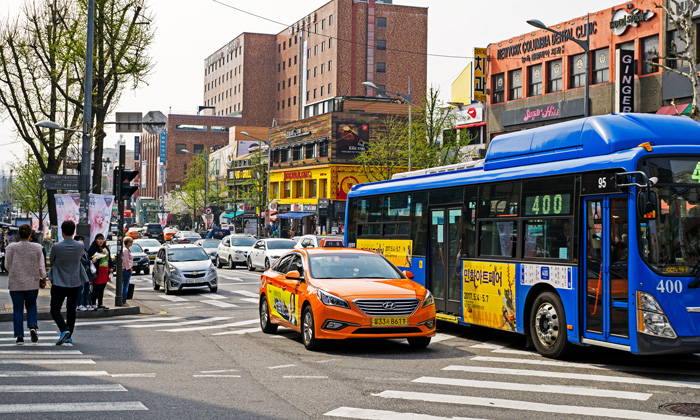
Rapid transit systems operate in six major South Korean cities, except for Sejong.
Currently operational
Seoul capital area
- Metropolitan Rail
- Korail operates the following commuter lines: Bundang Line, Gyeongchun Line, Gyeongui–Jungang Line, Suin Line, Gyeonggang Line, and parts of metro lines Line 1, Line 3, Line 4.
- Korail Airport Railroad operates AREX
- NeoTrans operates Shinbundang Line
- E-Rail operates Seohae Line
- Urban Rail
- Seoul Metro operates Line 2, Line 5, Line 6, Line 7, Line 8, and parts of lines Line 1, Line 3, Line 4, and Line 9 Second Extension.
- Seoul Metro Line9 (a joint venture between Veolia Transport and Hyundai Rotem) operates Line 9 First Extension
- Incheon Transit operates the whole Incheon subway system (I1 & I2), as well as sections of Seoul Subway Line 7.
- Light Metro Rail
- Uijeongbu Light Rail operates U Line
- Yongin Rapid Transit operates EverLine
- UI trans operates Ui LRT
Busan–Ulsan–Gyeongnam area
- Metropolitan Rail
- Korail operates the following commuter line: Donghae
- Urban Rail
- Busan Transportation operates lines 1, 2, 3, and 4
- Light Metro Rail
- B&G Metro operates the Busan–Gimhae light rail
Daegu–Gyeongbuk area
- Daegu Metropolitan Transit operates the whole subway system.
Daejeon
- Daejeon Metropolitan Express Transit operates the whole subway system.
Gwangju
- Gwangju Metropolitan Rapid Transit operates the whole subway system.
See also
- Transportation in South Korea
External links
- Subway transferring information for South Korea (in Japanese)
![Ultimate Guide to Transportation in Korea for Tourists [2025] Korea](https://b2587717.smushcdn.com/2587717/wp-content/uploads/2022/05/Intercity-Bus-in-Korea-2048x1342.jpg?lossy=1&strip=1&webp=1)